
Rare Disease Spotlight
Fabry Disease
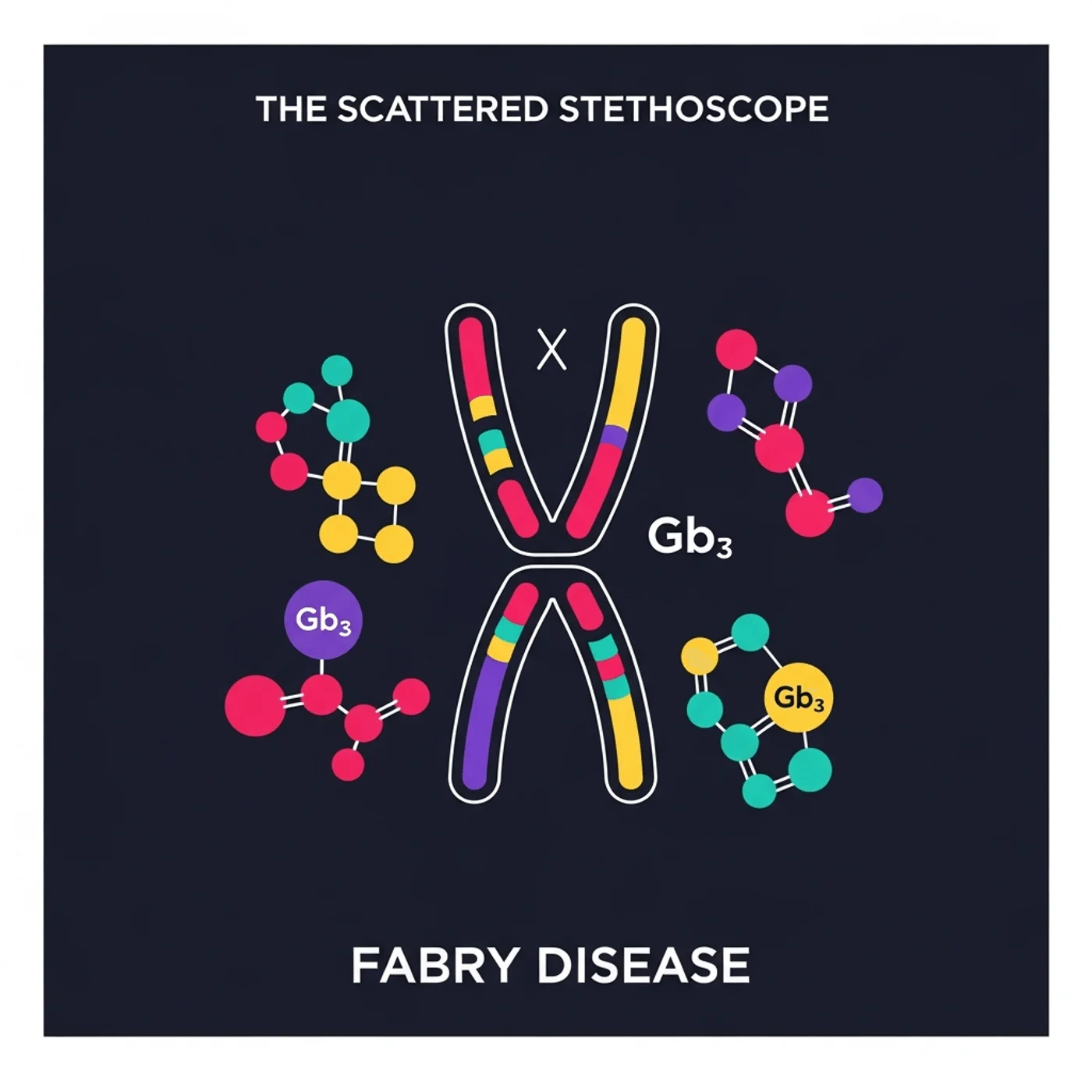
A rare X-linked genetic disease where a missing enzyme lets fatty stuff build up in cells, slowly hurting the heart, kidneys, and nerves.
Connection: Rare X-linked lysosomal storage disease
Overview
Fabry disease (also called Anderson-Fabry disease) is a rare inherited condition where the body is missing enough of an enzyme called alpha-galactosidase A (a protein that breaks down a specific kind of fat in our cells). Without that cleanup crew, a fatty molecule called globotriaosylceramide (Gb3) piles up inside cells all over the body. It is passed down on the X chromosome, so it shows up most dramatically in boys and men, but women can absolutely be affected too.
Impact
Patients often start showing symptoms in childhood with burning pain in their hands and feet, weird sweating patterns, and tiny dark-red skin spots called angiokeratomas, and those symptoms get written off for years before anyone connects the dots. By the time adults get diagnosed, a lot of them already have kidney damage, an enlarged heart, or have had a stroke way too young. Families carry a heavy load with this one because it is genetic, so a single diagnosis often means grandparents, siblings, and kids all need testing, and that conversation is a lot.
Medical Overview
Fabry is caused by pathogenic variants in the GLA gene on Xq22, which codes for the lysosomal enzyme alpha-galactosidase A (alpha-Gal A). When that enzyme is deficient, globotriaosylceramide (Gb3) and its deacylated form lyso-Gb3 accumulate in lysosomes of vascular endothelium, cardiomyocytes, podocytes, and peripheral nerves. Classic presentation includes acroparesthesias (burning pain in hands and feet), hypohidrosis (reduced sweating), cornea verticillata (whorl-shaped corneal deposits seen on slit lamp), angiokeratomas, progressive chronic kidney disease, left ventricular hypertrophy with eventual cardiomyopathy, and early ischemic stroke. Diagnosis in males is typically made by measuring low alpha-Gal A activity in leukocytes or dried blood spot, with GLA gene sequencing for confirmation, while females usually need genetic testing upfront because enzyme levels can look normal. Elevated plasma lyso-Gb3 is now used as a supportive biomarker for diagnosis and treatment monitoring. Treatment centers on enzyme replacement therapy (ERT) with recombinant alpha-Gal A (agalsidase beta or agalsidase alfa) given by IV every two weeks, plus the oral pharmacological chaperone migalastat for patients with amenable GLA missense variants, alongside supportive care with ACE inhibitors or ARBs for kidney protection, standard heart failure and arrhythmia management, neuropathic pain agents, and stroke prevention. Newer approaches under active investigation include second-generation ERTs like pegunigalsidase alfa, substrate reduction therapies, mRNA-based enzyme replacement, and AAV gene therapy aiming to provide durable endogenous enzyme production.
References
- Lenders M, et al.. Progress and Challenges in the Treatment of Fabry Disease. . BioDrugs . 2025.
- Germain DP, et al.. An expert consensus on practical clinical recommendations and guidance for patients with classic Fabry disease. . Molecular Genetics and Metabolism . 2022.
- Thompson SE, et al.. Fabry Disease: Insights into Pathophysiology and Novel Therapeutic Strategies. . Biomedicines . 2025.