
Rare Disease Spotlight
CVID
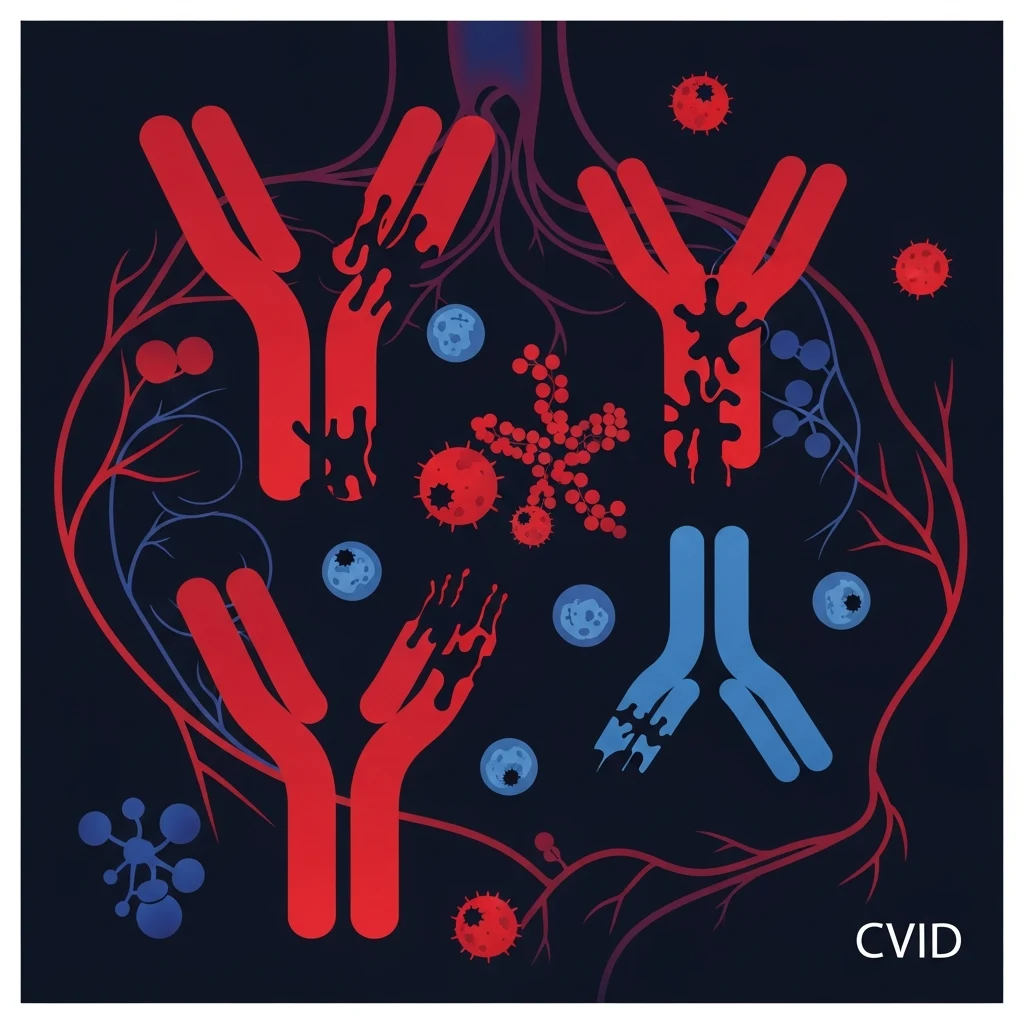
Common Variable Immunodeficiency - a primary immune deficiency causing frequent infections.
Connection: Immune deficiency disorders
Overview
Common variable immunodeficiency (CVID) is the most common symptomatic primary antibody deficiency. B cells don't differentiate properly into antibody-producing plasma cells, which leads to hypogammaglobulinemia (low immunoglobulin levels) and poor responses to both vaccines and infections. Rather than one disease, CVID is really a clinically and genetically diverse group of disorders, usually showing up in adolescence or adulthood, though it can appear at any age.
Impact
People with CVID often spend years dealing with recurrent sinus and lung infections before getting diagnosed, which can leave permanent damage like bronchiectasis and chronic lung disease. A meaningful subset also develops autoimmunity, granulomatous-lymphocytic interstitial lung disease (GLILD), enteropathy, and an increased risk of certain cancers. Lifelong immunoglobulin replacement, frequent specialist visits, and the unpredictability of noninfectious inflammatory complications all weigh heavily on quality of life and on the healthcare costs patients and families absorb.
Medical Overview
CVID is defined by markedly reduced serum IgG with low IgA and/or IgM, a poor response to vaccines, and exclusion of other causes of hypogammaglobulinemia, usually diagnosed after age 4. A minority of patients have an identified single-gene cause (like TACI, BAFF-R, CTLA4, LRBA, NFKB1, NFKB2, PIK3CD, or ICOS), and genetic testing is increasingly recommended because it can reclassify patients, reveal treatable targets, and shape family counseling. Immunophenotyping (especially looking at switched memory B cells, transitional B cells, and T-cell subsets) helps stratify who's at higher risk for complications. The cornerstone of therapy is immunoglobulin replacement (given IV or subcutaneously) to cut down serious infections, plus prompt antibiotic treatment when infections do happen and appropriate vaccination. The noninfectious complications (autoimmune cytopenias, enteropathy, GLILD, lymphoproliferation, higher cancer risk) often need immunomodulatory agents like rituximab, mycophenolate, abatacept, JAK inhibitors, or sirolimus, with targeted therapies increasingly guided by the specific genetic defect in monogenic CVID-like disorders.
References
- Remiker A, Bolling K, Verbsky J. Common Variable Immunodeficiency . Medical Clinics of North America . 2024.
- Fevang B. Treatment of inflammatory complications in common variable immunodeficiency (CVID): current concepts and future perspectives . Expert Review of Clinical Immunology . 2023.