Rare Disease Spotlight
Coffin-Siris Syndrome
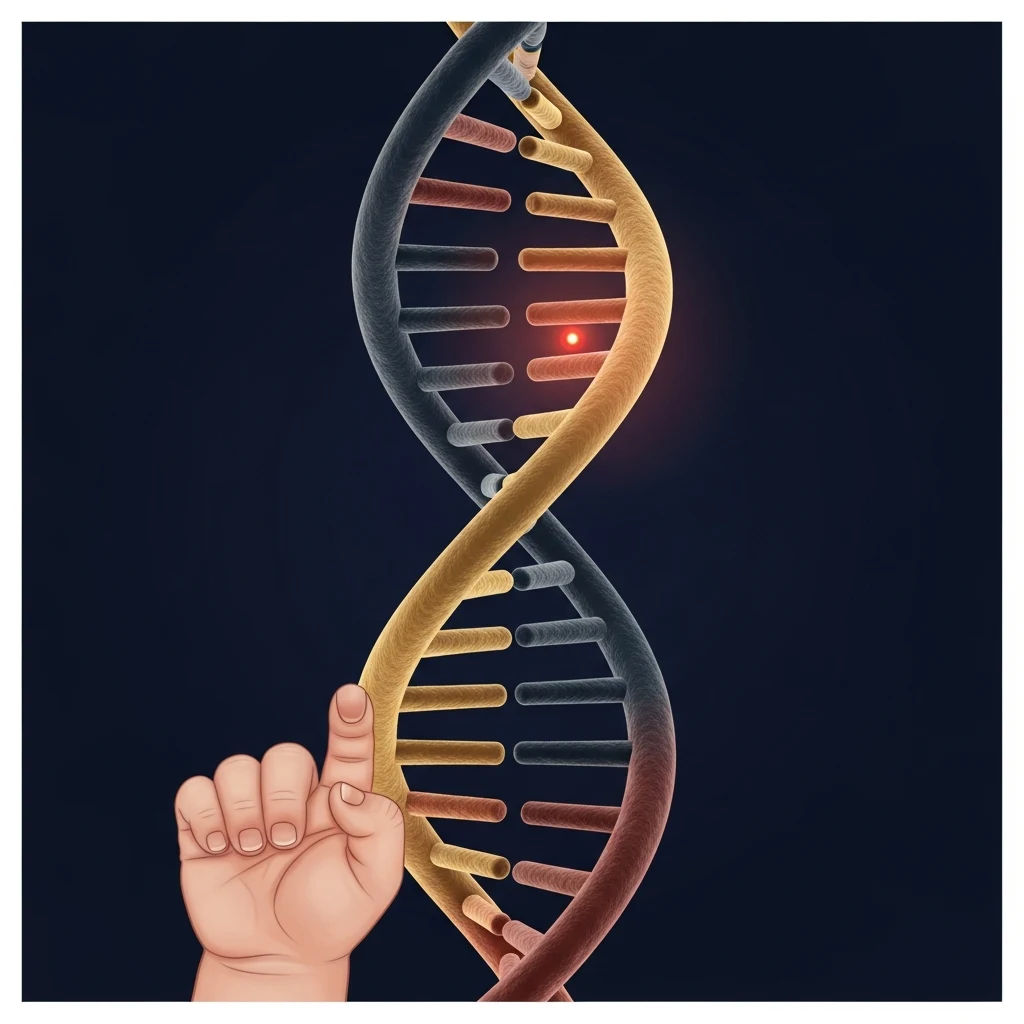
A rare genetic condition affecting development of the fifth fingers/toes, facial features, and cognitive ability.
Connection: Genetic & chromosomal awareness
Overview
Coffin-Siris syndrome (CSS) is a rare genetic condition caused by changes in the genes that make up the BAF (also called SWI/SNF) chromatin remodeling complex, most often a gene called ARID1B. Kids with CSS usually have developmental delay or intellectual disability, distinctive facial features, sparse scalp hair with thick eyebrows, and underdeveloped or missing pinky fingernails and the tip bones of the pinky fingers.
Impact
Children with CSS typically have moderate to severe intellectual disability, feeding problems that often need tube feeding in infancy, low muscle tone, and frequent infections, all of which ask a lot of caregivers. Many kids also have epilepsy, autism features, ADHD, and anomalies in other organs, so families end up juggling a long list of specialists, and the lifelong nature of the condition shapes school, independence, and what adult support will look like.
Medical Overview
CSS is caused by a single copy change in one of several BAF complex genes, including ARID1B (the most common, making up roughly half to three-quarters of cases), ARID1A, SMARCA4, SMARCB1, SMARCE1, and SOX11, among others. These changes disrupt how chromatin gets remodeled, which then messes with gene expression during brain development. Clinically you see the characteristic facial features, the fifth-digit nail and phalanx underdevelopment, developmental delay, low muscle tone, feeding issues, and variable anomalies of the heart, genitourinary system, and brain (including corpus callosum differences). Diagnosis is confirmed by molecular testing, usually exome sequencing or a targeted BAF-complex gene panel, because the features overlap with other syndromes. Management is supportive and symptom-based, leaning heavily on early intervention therapies, seizure control, nutritional support, surveillance for structural anomalies, and behavioral or psychiatric care. Epilepsy shows up in a notable minority of patients, and newer work suggests that ARID1A-related CSS may carry a higher risk for certain embryonal tumors, which is shaping surveillance conversations.
References
- Ciliberto M, et al.. Epilepsy in Coffin-Siris syndrome: A report from the international CSS registry and review of the literature . American Journal of Medical Genetics Part A . 2023.
- Kosho T, et al.. Coffin-Siris syndrome and related disorders involving components of the BAF (mSWI/SNF) complex: historical review and recent advances using next generation sequencing . American Journal of Medical Genetics Part C: Seminars in Medical Genetics . 2014.
- Vergano SS, Deardorff MA. Clinical features, diagnostic criteria, and management of Coffin-Siris syndrome . American Journal of Medical Genetics Part C: Seminars in Medical Genetics . 2014.