
Rare Disease Spotlight
Chiari Malformation
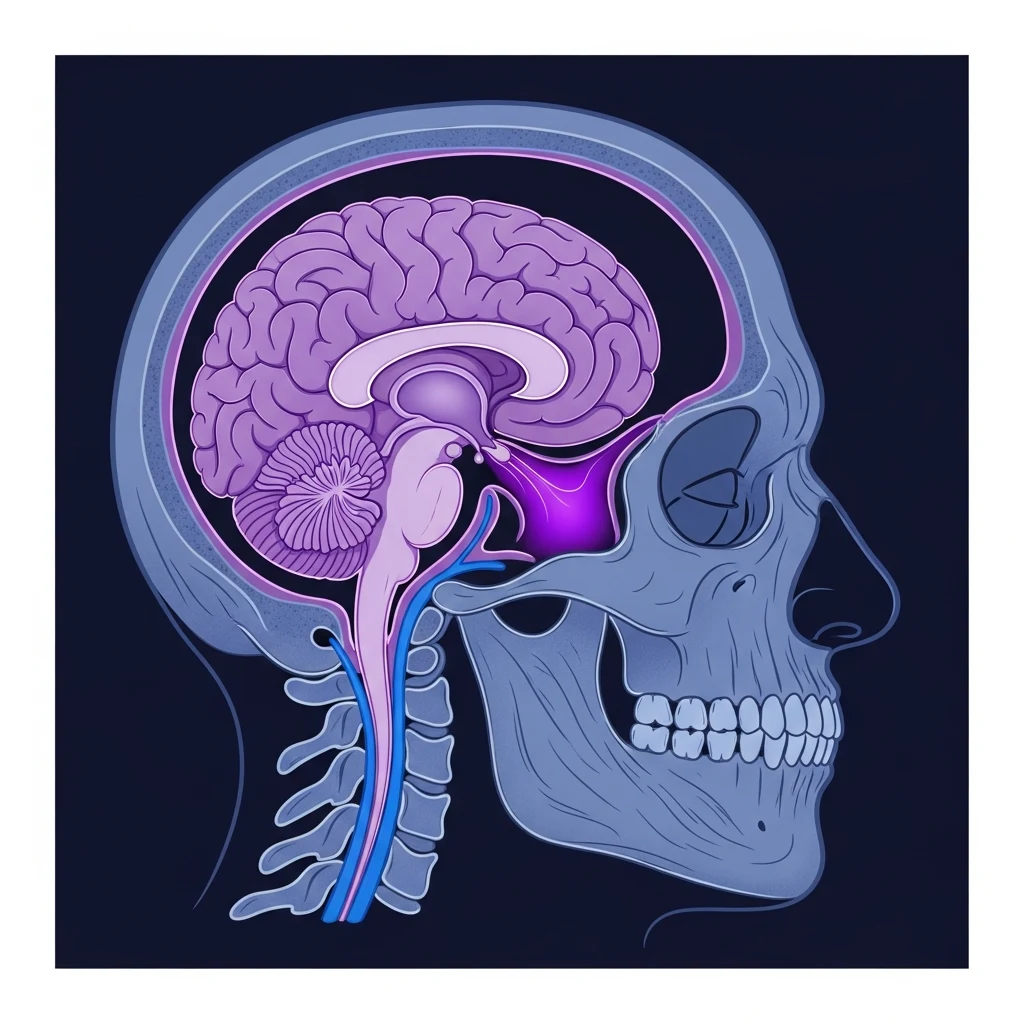
A condition where brain tissue extends into the spinal canal, causing headaches and neurological symptoms.
Connection: Brain & neurological conditions
Overview
Chiari malformation type I (CM-I) is a structural issue at the base of the skull where the cerebellar tonsils (the bottom part of the cerebellum) drop at least 5 mm below the opening at the base of the skull, sometimes pressing on the brainstem and upper spinal cord. It shows up in about 1% of the population, though lots of people never have symptoms, and interestingly, the amount of herniation doesn't reliably predict how bad symptoms will be.
Impact
People who do have symptoms often spend years dealing with headaches triggered by coughing or straining, neck pain, balance problems, dizziness, trouble swallowing, and neurological symptoms from an associated syrinx (a fluid-filled cavity in the spinal cord), all of which can seriously affect work, school, and daily function. Families often go through a long, frustrating diagnostic journey and then face the tough decision of whether and when to pursue decompression surgery.
Medical Overview
CM-I happens when there's a mismatch between a smaller-than-normal posterior fossa (the back part of the skull) and the normal-sized brain tissue inside it, pushing the tonsils down and disrupting cerebrospinal fluid flow. Secondary forms can come from conditions like intracranial hypotension or overshunting. Typical symptoms include headaches at the back of the head that get worse with coughing or straining, brainstem and cerebellar signs, sleep-disordered breathing, and symptoms of syringomyelia (sensory changes, weakness, scoliosis). Diagnosis is made with brain and cervical spine MRI showing tonsillar descent greater than 5 mm, and phase-contrast cine MRI can sometimes help assess CSF flow. Asymptomatic patients are usually just watched. Patients with real symptoms or progressive syringomyelia are offered posterior fossa decompression, with or without duraplasty, and sometimes tonsillar reduction. Recent reviews really emphasize individualizing the surgical technique, careful pediatric risk stratification, and picking the right patients to get good outcomes.
References
- Rosenblum JS, et al.. Chiari Malformation (Update on Diagnosis and Treatment) . Neurologic Clinics . 2022.
- Bianchi F, et al.. Chiari I malformation: management evolution and technical innovation . Child's Nervous System . 2023.